
by Elisabeth Rhyne, Board Chair, Just Neighbors
While the national debate about immigration can inflame tempers on both sides, I appreciate the refreshing antidote Just Neighbors offers as an organization that approaches immigration with a compassionate heart.
Just Neighbors doesn’t play politics or raise a strident voice. Instead, it quietly pursues the mission it has supported for over 20 years to provide legal assistance to immigrants in Northern Virginia who can obtain status through the pathways U.S. immigration law offers, especially those who cannot afford legal fees.
Over the years, Just Neighbors has helped over 10,000 people from just about every country in the world to get the visas, work permits, and even citizenship, to become contributing members of their adopted communities.

For example, a husband and wife, both physicians, came as refugees from Iraq. When they contacted Just Neighbors they were overwhelmed with the new country and new language, studying to pass qualifying exams in the U.S., and caring for their toddler. Just Neighbors assisted the family to receive green cards. This family had the ability to thrive, they simply needed help getting on their feet after fleeing their homeland.
Some clients have more complex situations. For example, “Mariela”, from Bolivia, whose status here depended on her U.S. citizen husband, who was abusing her. Using the provisions of the Violence Against Women Act, Just Neighbors helped her obtain a green card and establish an independent new life.
As the Board Chair and not a lawyer, I am far from an expert on immigration law. I’m always learning, and what amazes me, is how complicated our immigration system is. It takes experienced immigration attorneys to sort through the thicket of rules, procedures and possibilities and find the right kind of help for each person.

Just Neighbors staff attorneys specialize in what, to me, are very arcane matters. Even though they are sacrificing the significantly higher salaries they could earn in a firm, they love their work, and you can see them hugging clients when they bring the good news that a work permit has been approved. They especially love to hear how their clients fare afterwards.
Head attorney, Dominque Poirer was thrilled to get a note from a former client: “You told me to call you when we had big changes in our life. So I wanted to tell you that I got married, I have a new address because I bought a house, and I joined the Navy and am shipping out on Friday.”
The staff attorneys determine how many people Just Neighbors can assist, and that’s why one of our top priorities is to reach the financial standing that would enable us to increase our legal staff from three to four attorneys.
The staff attorneys time is golden for Just Neighbors, because every case must go through their hands. But one of the best things about Just Neighbors is how it uses volunteers to leverage that scarce resource. Volunteer attorneys assist staff attorneys in preparing cases, upping caseloads the organization can handle. In addition, ordinary folks like me can help with client interviews and office administration. The organization seeks to give volunteers a chance to reach out in compassion to others. It believes that when volunteers connect personally with immigrants they see the individuals, and immigration itself, through new eyes. In fact, creating a welcoming community through volunteers is part of the mission. Volunteers save money too: the estimated value of donated time is about 80 percent as large as Just Neighbors total budget.
Right now there is great uncertainty about the future of immigration policy, and that is putting stress on Just Neighbors while making its work more important, and a little different, from the past few years. For example, we don’t yet know whether the Deferred Action for Childhood Arrivals (DACA) program will be continued. DACA provides work permits for undocumented young adults who were brought to the U.S. as children, often called “Dreamers”. Just Neighbors has helped nearly 900 DACA applicants since the program began in 2013 and would like to continue to enable these young adults to take their places in society.
In addition, the stepped up enforcement of deportation orders by immigration authorities is creating fear and uncertainty throughout the immigrant community. This leads Just Neighbors into a new role: responding to calls from people seeking answers and advice. Although Just Neighbors cannot assist those who have no legal pathway, it offers advice on how to respond if someone is stopped by the police, how to prepare for children to be cared for if the father or mother is deported, and what a person’s rights are in those circumstances. Just Neighbors is taking on this essential educational role on top of its regular caseload out of caring for the communities it works with, trying to get the word out to as many people in those communities as it can.
One of the great things about Just Neighbors is that a relatively small (and really pretty inexpensive) intervention can make an enormous difference in someone’s life. When a person gets a work permit, escapes an abusive relationship, or rejoins a family, she often feels that her life has just begun. Just Neighbors gives its clients a tangible acknowledgment that they belong in this community and an ability to look at their future with confidence. I love it for that.
If you’d like to find out more about Just Neighbors, see http://cfp-dc.org/nonprofits/1352/Just-Neighbors/

 Our Executive Director, Kari Galloway, works tirelessly to ensure that the organization offers full support to the women we serve. She recently reached her 12-year anniversary with Friends of Guest House. Without her, the program would not be as strong and successful as it currently is. She inspires the staff to work hard and, more importantly, she inspires the women to succeed. Not only does she provide the encouragement and support to each client but she holds them accountable for their actions and offers the constructive criticism they need.
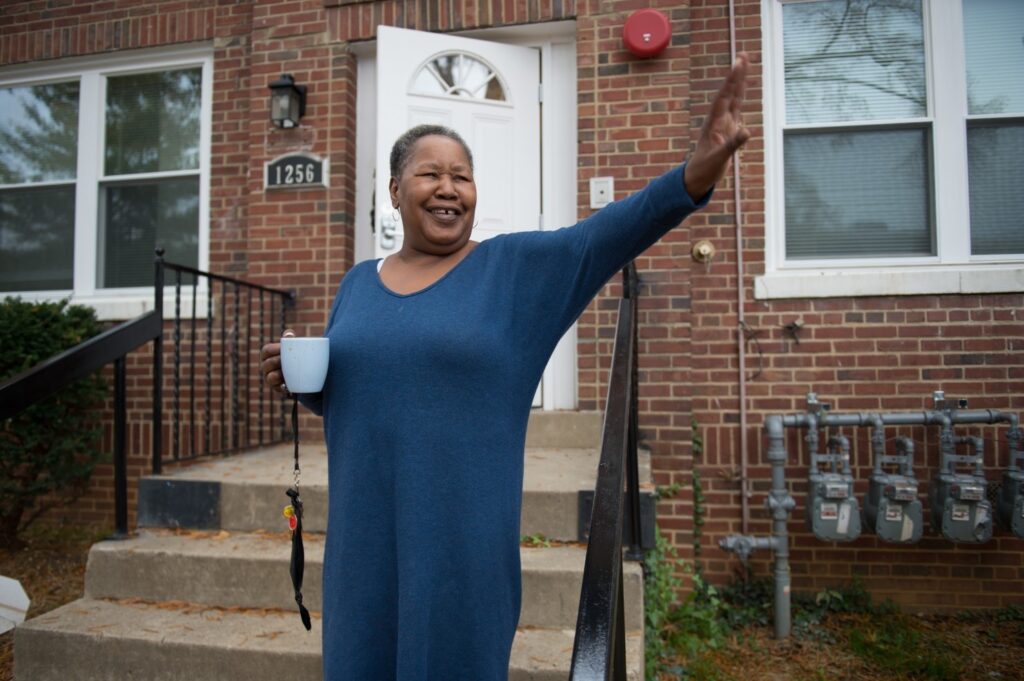 Janet Starke waves to a passing neighbor outside of her new home in N.E. D.C. With support from Open Arms Housing, women like Janet, who were previously homeless, have moved into permanent homes with a welcoming and supportive environment.(Photo credit: Kate Patterson/For The Washington Post)




 Women make up only 25 percent of the computing workforce in the United States. For women of color, this drops drastically, with just 3 percent of the workforce made up of African American women and 1 percent Latina women.
 It doesn’t have to be expensive, or complicated. So much can be solved by teaching women how to use technology. With a small investment in women’s lives, we can have a huge impact on social change.


